We research products independently. When you buy through links on this page, we may earn a commission from Amazon at no extra cost to you. As an Amazon Associate we earn from qualifying purchases. Read our affiliate disclosure.
Here is the short answer: both are mechanical watches. They keep time the same way, with a mainspring, a gear train, an escapement and a balance wheel. The difference is how the mainspring gets wound. An automatic winds itself with a rotor as you move your wrist. A manual-wind (hand-wound) mechanical watch has no rotor, so you wind it by turning the crown, usually once a day.
Choose an automatic if you want a mechanical watch that looks after itself when worn. Choose a manual-wind if you want a thinner case, a full view of the movement and a daily ritual. When people search "automatic vs mechanical watch", they are really comparing automatic with manual.
Side-by-side comparison
| Automatic | Manual-wind mechanical | |
|---|---|---|
| How it winds | Rotor winds the mainspring as you move; most can also be crown-wound | Crown only |
| Daily routine | None if worn enough | Wind once a day |
| Case thickness | Usually thicker, because of the rotor and winding train | Can be thinner |
| View through the case back | Partly covered by the rotor | Full view of the movement |
| Mainspring protection | Slipping bridle, so it cannot be overwound | Spring is fixed; you stop at firm resistance |
| Works on a watch winder | Yes | No |
| Example calibers | Omega 8800 (55 h), Hamilton H-10 (80 h), Rolex 3230 (about 70 h) | Omega 3861 (50 h), Hamilton H-50 (up to 80 h) |
| Amazon | See options | See options |
All figures above are the makers' own.
What they have in common
Both watch types share the same core. The mainspring stores energy in a barrel. The gear train carries it to the hands. The escapement releases it a tooth at a time, and the balance wheel and hairspring set the rate. Accuracy depends on the quality of that regulating organ and on how well the watch is adjusted, not on how it is wound. Our guide to how automatic watches work covers each stage.
Both also follow the same chronometer rules if certified. The COSC standard for mechanical movements, based on ISO 3159, requires an average daily rate between -4 and +6 seconds, whether the watch winds itself or not.
Difference 1: how you wind it
Automatic. A semicircular rotor swings with your wrist. Reverser wheels or a pawl lever turn those swings into one-way winding, gearing them down heavily. Rolex says it patented the free, full-turn Perpetual rotor in 1931, and that layout is still the standard. Most automatics can also be wound through the crown when they have stopped; see how to wind an automatic watch.
Manual. You turn the crown, and the crown's winding wheels tighten the spring directly. Hamilton says its Khaki Field Mechanical, with the hand-wound H-50 caliber, is wound by turning the crown clockwise. Most owners make it a morning habit.
Difference 2: thickness and the view
The rotor and its winding train sit on top of the movement, so automatics are usually thicker than equivalent manual-wind watches. Manual watches can be slimmer, which is one reason dress watches often use them.
There is also the view. On an automatic, the rotor covers part of the movement through a display back. On a manual, you see the bridges, wheels and balance in full.
Difference 3: protection against overwinding
The two use different mainspring attachments.
- Automatic mainsprings end in a slipping bridle that grips the barrel wall by friction. Once the spring is full, it slips instead of tightening further. Seiko's instructions say turning the crown of its 4R automatics past full wind will not break the spring.
- Manual-wind mainsprings are fixed to the barrel. When the spring is full, the crown stops turning with firm resistance. That is your signal to stop. Forcing it past that point risks damage.
Difference 4: power reserve
Power reserve depends on the mainspring and barrel, not on whether the watch is automatic or manual. Long reserves exist on both sides:
| Watch | Caliber | Winding | Power reserve (maker's figure) | Amazon |
|---|---|---|---|---|
| Omega Speedmaster Moonwatch Professional | 3861 | Manual | 50 hours | |
| Hamilton Khaki Field Mechanical | H-50 | Manual | Up to 80 hours | See options |
| Omega Seamaster Diver 300M | 8800 | Automatic | 55 hours | |
| Rolex Submariner | 3230 | Automatic | About 70 hours | |
| Hamilton Khaki Field Auto | H-10 | Automatic | 80 hours | See options |
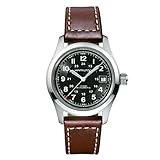
The real-life difference: an automatic worn all day arrives home well wound. A manual watch is only as wound as you made it that morning. More in our automatic watch power reserve guide.
Difference 5: watch winders
A winder rotates the watch so its rotor swings. No rotor, no effect. So a winder can keep an automatic running between wears, but it is useless for a manual-wind watch. That catches out Omega owners in particular, because the Moonwatch uses the manual-wind 3861. Our what is a watch winder guide explains the rest.
Difference 6: servicing and complexity
An automatic has more parts, because the self-winding module is added to the base movement. SJX Watches notes that winding systems themselves can wear: reverser wheels in some movements have had wear-related issues, and pawl systems add friction to manual winding because the automatic train turns backward. A manual movement has fewer parts to wear. Both need periodic professional servicing to clean and re-lubricate the movement.
Difference 7: accuracy in daily wear
On paper, winding type does not change accuracy. In daily life it can, because accuracy depends on how wound the mainspring is. SJX Watches explains that a mainspring delivers its strongest torque when fully wound, settles to a steadier middle range for most of its run, and weakens as it nears empty. Seiko says the same in owner terms: an under-wound watch may gain or lose time.
That cuts both ways:
- A manual watch wound every morning spends its day in the upper and middle part of its reserve, which tends to give consistent timekeeping.
- An automatic worn all day tops itself up continuously, but one worn only briefly may sit near the bottom of its reserve and run less consistently. Seiko recommends wearing its 4R automatics more than 10 hours a day, or winding them fully if not worn.
In short, both are as accurate as their movements allow when they are kept well wound. The manual makes you do it. The automatic does it for you if you wear it enough.
A short history: why manual came first
Every early wristwatch was manual-wind. Self-winding pocket watches existed from the 18th century, credited to Abraham-Louis Perrelet, but they relied on a weight swinging inside a watch carried upright. The wristwatch version took until the 1920s, when John Harwood patented a design whose weight swung through a limited arc. Rolex says it patented its free, 360-degree Perpetual rotor in 1931, and from the 1950s onward automatics became the norm for everyday watches.
Manual-wind never went away. It survived in dress watches, where thinness matters, and in chronographs. Omega's Speedmaster Moonwatch Professional is the best-known example: Omega lists its current calibre 3861 as a manual-winding chronograph movement with a 50-hour reserve.
How to wind a manual watch properly
- Take the watch off. Winding on the wrist bends the crown stem.
- Unscrew the crown first if it screws down.
- Turn the crown clockwise with your thumb and forefinger. Hamilton, for example, says to wind its H-50 Khaki Field Mechanical by turning the crown clockwise.
- Wind steadily until you feel firm resistance. That means the spring is full. Stop there.
- Do not force it. A manual-wind spring is fixed to the barrel, so forcing past resistance can damage it.
- Wind at the same time each day. A morning routine keeps the spring in its most consistent range.
The same basic movement applies to winding an automatic by hand, with one difference: an automatic's crown keeps turning past full wind because of the slipping bridle. Our how to wind an automatic watch guide covers that side.
Which is better for a first mechanical watch?
For most people, an automatic. It works like any other watch day to day: put it on and go. It forgives a forgotten wind, and if you rotate watches, a winder can keep it ready. The 80-hour automatics from Hamilton (H-10) and Tissot (Powermatic 80) also survive a weekend off the wrist.
Choose a manual-wind first if the ritual is the point. Some people love the daily minute of winding as a way to connect with the watch. Hamilton's Khaki Field Mechanical and Omega's Moonwatch show that a manual watch can be just as practical, especially with a long reserve.
Common mistakes
- Putting a manual-wind watch on a winder. It has no rotor, so nothing happens.
- Forcing a manual crown past resistance. Stop when it tightens.
- Assuming an automatic never needs crown winding. After a stop, or on quiet days, a few dozen turns help. Rolex calls for at least 25 after a stop.
- Winding on the wrist. Take the watch off to protect the crown stem.
- Forgetting the screw-down crown. Screw it back in after winding to keep the watch water-resistant.
- Judging accuracy on a nearly empty spring. Both types run less consistently near the end of their reserve.
Choose an automatic if…
- You want to put the watch on and forget about winding.
- You wear one watch daily, or will use a winder.
- You like a mechanical watch but not a daily ritual.
- Thickness is not a concern.
Choose a manual-wind if…
- You enjoy the morning ritual of winding.
- You want the thinnest possible case, often for dress wear.
- You like seeing the whole movement through the case back.
- You want a historically classic design, such as a manual-wind chronograph.
- You don't need it to look after itself while you are away.
FAQ
Is an automatic watch a mechanical watch?
Yes. An automatic is a mechanical watch with a self-winding rotor added. When people say "mechanical" in contrast to "automatic", they usually mean a manual-wind (hand-wound) mechanical watch.
Can a watch winder wind a manual watch?
No. A winder works by swinging the rotor, and a manual-wind watch has no rotor. The Omega Speedmaster Moonwatch Professional, for example, uses the manual-wind calibre 3861, so a winder does nothing for it.
Is a manual watch more accurate than an automatic?
Not inherently. Both use the same kind of balance-wheel timekeeping. Accuracy depends on the movement's quality and adjustment, and on keeping the mainspring reasonably wound, since an under-wound watch may gain or lose time.
How often do you wind a manual watch?
Usually once a day, at the same time, which keeps the mainspring in its most consistent range. Even with a long reserve, such as Hamilton's H-50 at up to 80 hours, a daily wind is the simplest habit.
Can you overwind a manual watch?
A manual-wind mainspring is fixed to the barrel, so winding stops when you feel firm resistance. Stop there and do not force the crown. Automatics use a slipping bridle instead, so their crowns keep turning past full wind.
The bottom line
If you want mechanical without the maintenance routine, go automatic. If winding is part of the appeal, go manual. Comparing mechanical against battery instead? Read automatic vs quartz watches.